As Australia celebrates National Science Week, we are proud to recognise a significant achievement within the Vital Chemical team.
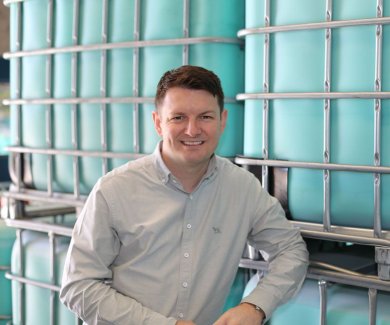
Senior Scientific Officer Asanga De Alwis has recently been awarded a Doctor of Philosophy (PhD) in Nanotechnology and Sustainable Energy Storage Materials, the culmination of years of research, dedication and discovery.
The theme of National Science Week – Seeds of Science: Nurturing Knowledge for All – highlights the importance of cultivating knowledge, curiosity and innovation for the benefit of society.
Asanga’s journey reflects this spirit, demonstrating how scientific research contributes to solving real-world challenges while inspiring future generations of scientists and innovators.
We sat down with Dr De Alwis to discuss his PhD journey, the research behind his work, and how the experience continues to shape his role at Vital Chemical.
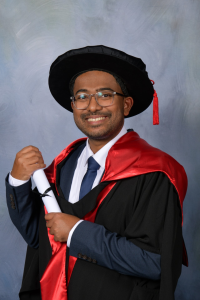
Q: Firstly, congratulations on earning your PhD. What does achieving a Doctor of Philosophy in Nanotechnology and Sustainable Energy Storage Materials mean to you personally and professionally?
Achieving a PhD has been the fulfilment of a lifelong dream. Science has fascinated me since childhood, and while my career path led me into industry after completing my Master’s degree, the ambition to undertake a doctorate never really left me.
Personally, it represents years of curiosity, persistence and a genuine passion for discovery. Professionally, it has been an opportunity to develop not only my technical expertise, but also my skills in critical thinking, problem solving and communication.
A PhD is about much more than research. It challenges you to navigate complex problems, adapt when things don’t go to plan and continuously learn along the way. The experience has strengthened my confidence as a scientist and reinforced the value of curiosity, resilience and lifelong learning. I see it not as the end of a journey, but as a foundation for continuing to learn, innovate and contribute through my work.
Q: For those unfamiliar with the field, can you explain what nanotechnology and sustainable energy storage materials are, and why they are important for the future?
Nanotechnology focuses on understanding and engineering materials at the nanoscale, which is approximately one billionth of a metre. At this scale, materials can behave very differently from their conventional form, often exhibiting unique properties that can unlock new possibilities across science and industry.
These properties have applications in areas ranging from medicine and electronics to transportation and energy storage. My research focused on how nanotechnology can be used to improve battery performance and help address some of the world’s growing energy challenges.
As we continue transitioning from fossil fuels to renewable energy sources such as solar and wind, one of the key challenges is storing energy efficiently and reliably. By designing and engineering materials at the nanoscale, we can create batteries that store more energy, operate more safely and last longer. Advances in energy storage will play a critical role in supporting renewable energy and building a more sustainable future.
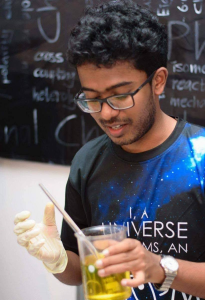
Q: Tell us about your PhD research project. What problem were you trying to solve, and what were some of the key findings or outcomes from your work?
My research focused on improving zinc-ion batteries, which are a promising alternative to conventional lithium-ion batteries. Zinc-ion batteries are inherently safer because they use water-based electrolytes and are far less likely to catch fire. They are also particularly relevant for Australia, given our abundant zinc resources.
The PhD consisted of three major research projects, each resulting in a publication. The first focused on extending battery life by addressing unwanted reactions that can occur inside zinc-ion batteries. By using advanced nanomaterials, I was able to improve battery durability and help move the technology closer to practical application.
The second project explored sustainability and upcycling. I developed a battery component using a commercially available galvanising spray, demonstrating how existing materials can sometimes be repurposed in innovative ways. It was a great example of how practical solutions can come from looking at familiar materials through a different lens.
My third project focused on developing a more sustainable battery material using a simplified, water-based manufacturing process. By removing the need for high temperatures and toxic solvents, the process became both more environmentally friendly and more practical from a manufacturing perspective.
Across all three projects, the common goal was to make energy storage technologies safer, more sustainable and more viable for real-world use. For me, that is where research delivers its greatest value, when it can bridge the gap between scientific discovery and practical outcomes.
Q: Looking back on your PhD journey, what are you most proud of achieving through your research?
What I’m most proud of is focusing on solutions that are practical, scalable and sustainable. From the beginning, I wanted my research to go beyond the laboratory and contribute to technologies that have the potential to create real-world impact.
Throughout the PhD, I was able to explore themes such as sustainability, upcycling and value creation, while developing solutions that could help improve future energy storage technologies. Seeing those ideas progress into practical research outcomes and published work was particularly rewarding.
Beyond the research itself, I also valued the opportunity to present at international conferences, participate in Three Minute Thesis competitions and mentor students. Those experiences reinforced the importance of communicating science clearly and making research accessible to a broader audience. Ultimately, great research creates the most value when it can be shared, understood and applied.
Q: Looking ahead, what do you see as the biggest opportunity in the fields of nanotechnology and sustainable energy storage, both for industry and for society?
From an Australian perspective, I believe the biggest opportunity lies in adding value to the incredible natural resources we already have.
Australia has abundant supplies of critical minerals such as lithium and zinc, yet much of this material is exported for processing elsewhere. The opportunity is to take that next step and develop higher-value products, including advanced materials and energy storage technologies, here in Australia.
We already have world-class researchers, strong infrastructure and deep technical expertise. By combining those strengths with our natural resource base, we have the potential to create new industries, support local manufacturing and generate greater economic value. At the same time, advances in energy storage will play an important role in supporting renewable energy and helping build a more sustainable future. For both industry and society, the opportunities are significant.
Q: How will the knowledge and skills you’ve gained through your PhD help you in your role as Senior Scientific Officer at Vital Chemical, and what opportunities does it create for the business?
While I’m not building batteries at Vital Chemical, the skills developed through a PhD extend far beyond a single field of study.
A doctorate is intensive training in critical thinking, problem solving and innovation. It teaches you how to approach complex challenges, ask the right questions and develop practical solutions. Those skills are highly transferable across different areas of science and industry.
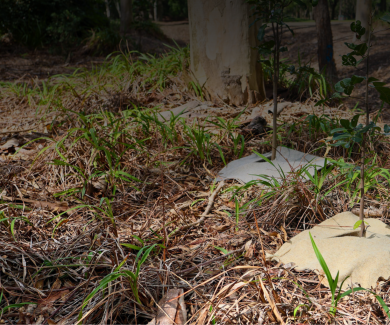
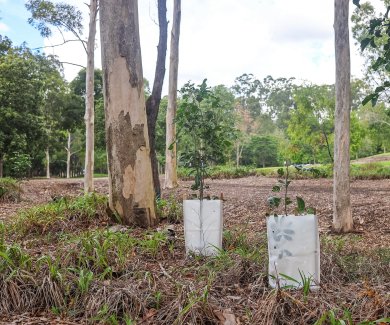
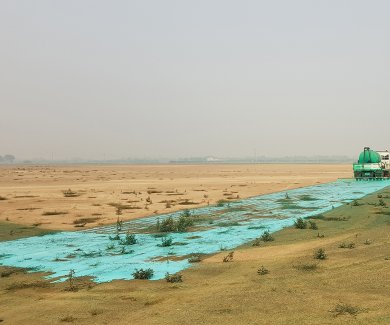
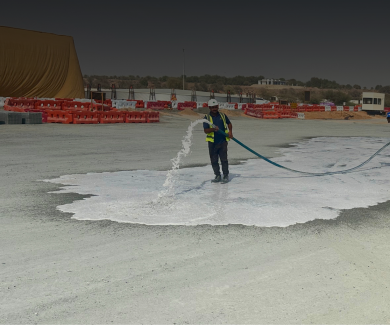
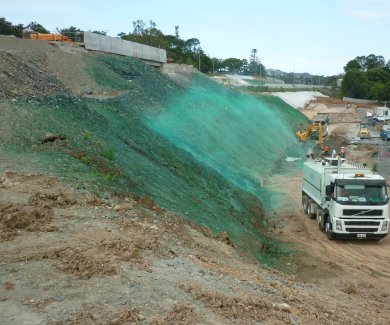
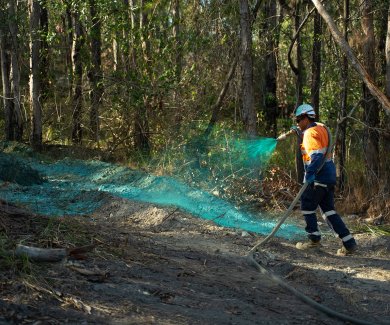
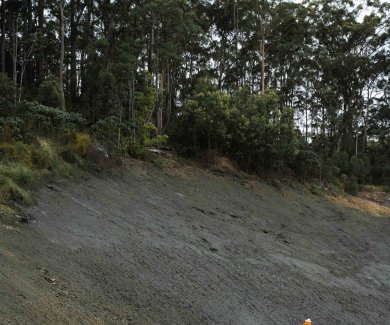
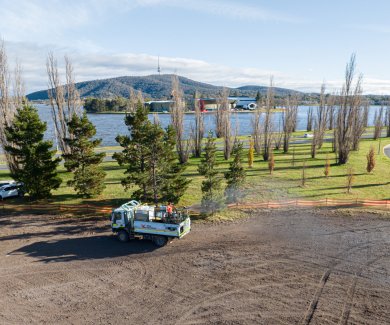
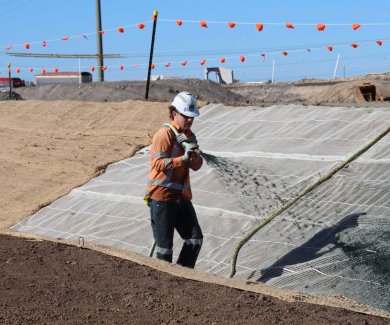
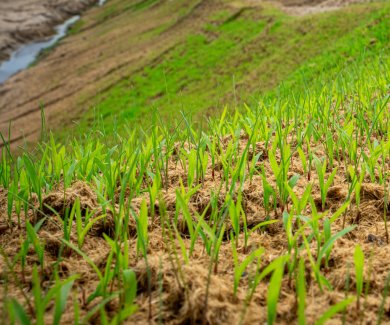
In my role at Vital Chemical, that mindset helps me tackle challenges relating to revegetation, soil stabilisation, erosion control and sustainable product development. There are also strong parallels between my research and our work, particularly in areas such as sustainability, resource efficiency and creating value from materials that might otherwise become waste.
Ultimately, both my PhD research and my work at Vital Chemical are driven by the same objective: using science to solve real-world problems and develop practical solutions that deliver positive environmental and commercial outcomes.
Q: National Science Week’s 2026 theme is Seeds of Science: Nurturing knowledge for all. How has your research journey shaped your view of the importance of sharing knowledge, mentoring others, and inspiring future scientists?
One of the most rewarding aspects of my PhD journey was the opportunity to share knowledge and support others. Throughout my studies, I mentored undergraduate students, participated in outreach activities and served as a research ambassador.
Those experiences reinforced the importance of communicating science beyond the laboratory. Research creates the greatest impact when it can be clearly understood, shared and applied by others.
I’ve learned valuable lessons through both successes and setbacks, and I’m always happy to share those experiences with students and early-career researchers. If something I’ve learned can help someone else navigate their own journey, then that’s a meaningful outcome.
Nurturing knowledge is not only about advancing science, but also about supporting the next generation of scientists and helping them realise their potential.
Q: What advice would you give to students, early-career scientists or professionals considering further study and research while building their careers?
Alongside developing technical expertise, invest time in building your communication, presentation and interpersonal skills. Great research creates the most impact when it can be communicated clearly and effectively.
Many excellent ideas never reach their full potential because they are not communicated beyond a technical audience. Being able to explain your work, tell its story and engage with different audiences is an important part of any research journey.
Take opportunities to present at conferences, participate in competitions and share your work wherever possible. These experiences build confidence, strengthen your communication skills and help you develop professionally. In my experience, the combination of strong technical knowledge and the ability to communicate it effectively can open many opportunities throughout your career.