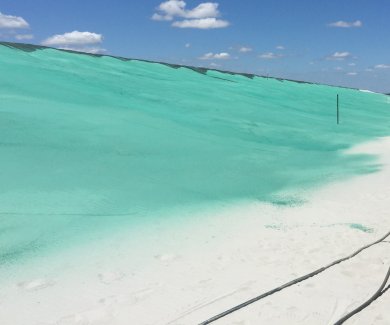
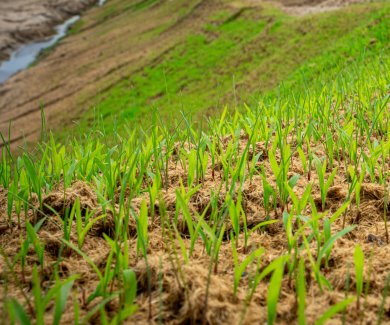
As we recognise World Sustainability Day, it is an opportunity to consider how innovation, collaboration and responsible resource management can help deliver environmental, social and economic outcomes for future generations.
Vital’s commitment to sustainability is embedded across all facets of our business and is reflected in our ongoing investment in research and development, environmental stewardship and sustainable product development.
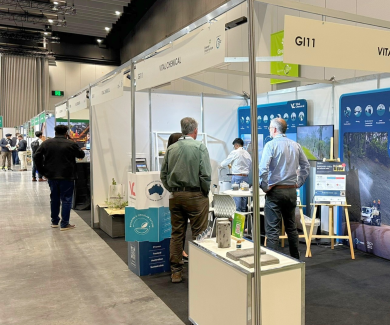
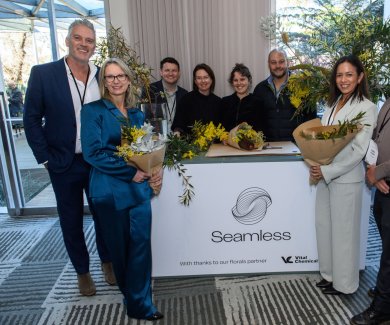
This year’s Waste Expo Australia in Melbourne provided an opportunity to demonstrate how these innovative solutions are helping deliver circular outcomes, support resource recovery and shape the future of carbon recovery and environmental rehabilitation.
Waste Expo Australia: Driving Circular Outcomes and Innovation
Co-located with the Greener Infrastructure Conference, Waste Expo Australia brings together industry leaders, researchers, government representatives and environmental professionals to explore opportunities to improve resource recovery, reduce waste and advance sustainable outcomes.
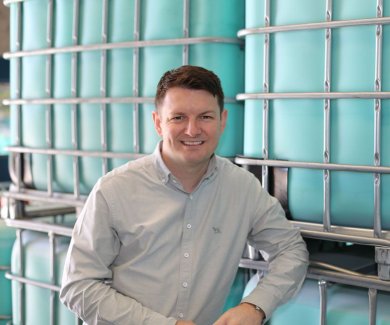
As part of the Circular Economy stream, Vital’s Senior Scientific and Sustainability Officer Dr Asanga De Alwis presented on Australia’s transition towards a circular economy and the role innovation can play in recovering value from waste streams while addressing environmental rehabilitation challenges.
The presentation explored industry-led innovation in carbon recovery and carbon return through environmental, civil and construction applications, drawing on collaborative research and development programs involving Australian universities, industry partners and end users.
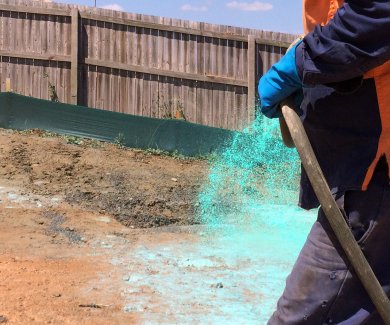
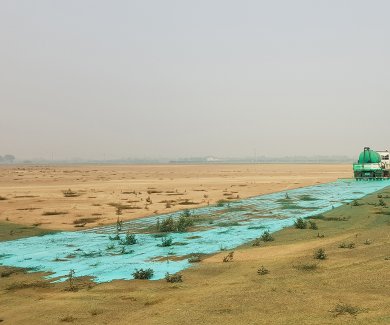
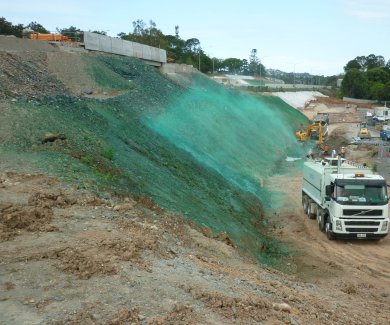
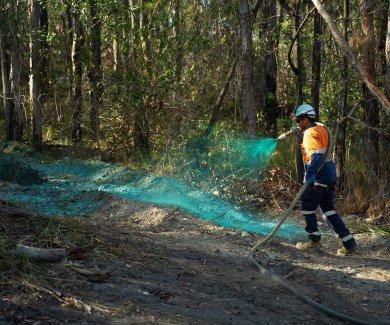
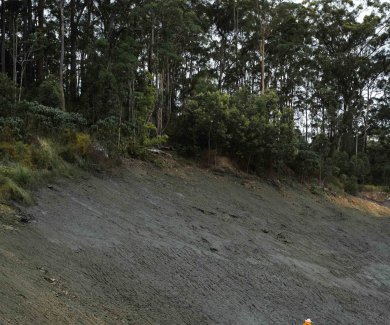
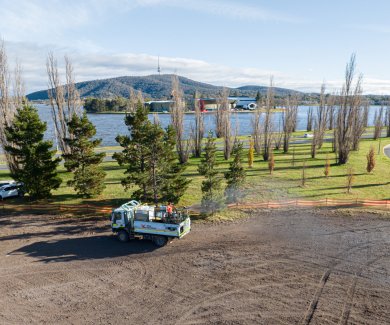
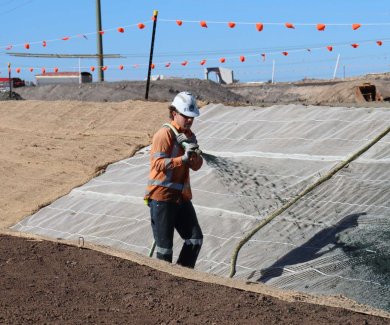
Vital Chemical has partnered with leading research institutions, including the University of Queensland, University of Southern Queensland and RMIT University, to investigate new applications for recovered materials and carbon-based environmental solutions. These projects demonstrate how recovered carbon can be incorporated into practical applications that support erosion control, land rehabilitation, revegetation and sustainable infrastructure outcomes.
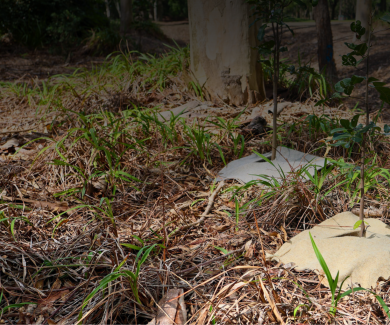
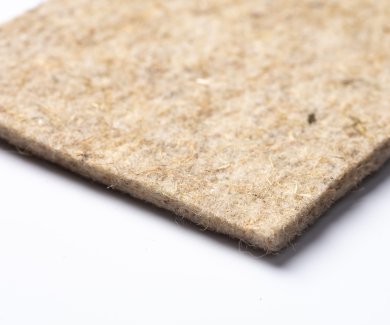
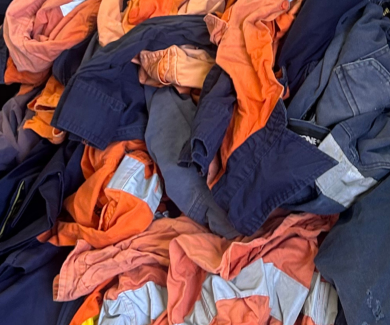
Project ReCarbon featured as a key case study, showcasing an Australian-first carbon recovery initiative that transforms unwearable construction clothing and other end-of-life textiles into a textile-derived biochar that can be safely returned to the environment.
Using examples from current research and industry implementation, the presentation highlighted the role carbon recovery technologies can play in supporting circularity, reducing waste and enabling the return of carbon to the environment through beneficial environmental and infrastructure applications. It also reinforced the importance of collaboration between industry, universities and government-supported initiatives in accelerating the translation of research into practical, scalable outcomes.
Research and Development Partnerships
Research and development remain central to Vital Chemical’s commitment to sustainability and innovation, with several projects currently being undertaken alongside leading Australian universities.
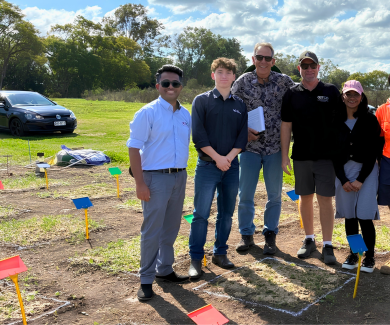
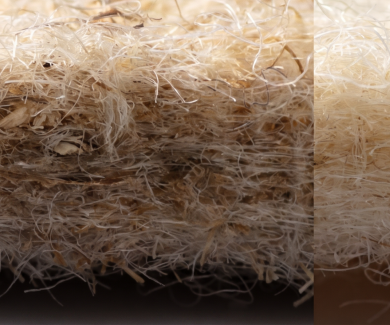
The University of Queensland (UQ) – Vital Chemical’s partnership with The University of Queensland is focused on developing a Biogel made from wood fibre residues that holds more water in hydromulch and enhances growth. The product has been developed as a bio-based alternative to synthetic super-absorbent polymers. At the UQ Gatton field trial conducted between June and July 2026, hydromulch containing 0.65% Biogel produced an average of 159% more harvest biomass than the control hydromulch treatment.
RMIT University – Through Vital’s partnership with RMIT University, Queensland-derived wood residues are being converted into fine biochar for use in concrete applications. Laboratory testing demonstrated that the biochar could replace 5% of conventional material in concrete while achieving comparable 28-day compressive strength of approximately 32 MPa. The research offers opportunities to reduce virgin sand consumption while storing carbon within long-life infrastructure assets such as footpaths, pavers, kerbs and blocks.
University of Southern Queensland (UniSQ) – Vital Chemical’s collaboration with the University of Southern Queensland is investigating the use of textile-derived biochar as a replacement for 10% of the sand used in printable concrete. Research has shown the fibres provide approximately 80% higher yield strength, improving layer stability during printing while increasing overall material performance. All directions tested exceeded 25 MPa at 28 days, demonstrating potential for lower-carbon printed walls and panels.
These research partnerships support Vital’s drive to remain at the forefront of innovation through the research, development, manufacture and supply of innovative solutions focused on resource recovery, resource reuse, sustainability and environmental applications.
Project ReCarbon: An Australian-First Carbon Recovery Initiative
In 2024, Australians purchased 1.51 billion items of new clothing, equivalent to 55 items for every Australian. While clothing reuse increased by 10% and textile recycling increased by 7%, an estimated 220,000 tonnes of clothing textiles were still sent to landfill.
Supported through the Seamless Circular Clothing Textiles Fund, a program funded by the Australian Government, the Project ReCarbon pilot program was established to investigate a practical circular economy pathway for clothing textiles that would otherwise be sent to landfill.
The initiative brings together a consortium of industry partners, each contributing specialised expertise throughout the project stages including Georgiou, Salvos Stores, Textile Recyclers Group and Earth Systems Australia.
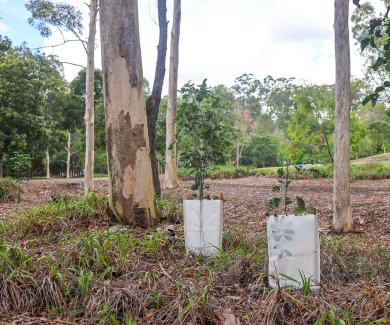
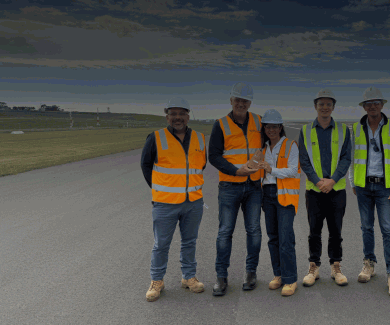
From the collection, sorting and decommissioning of the Hi-Vis workwear and other textiles through to pyrolysis, stack emissions testing and field application, Project ReCarbon provides a transparent and practical assessment of a viable pathway for transforming end-of-life textiles into clean carbon that can be safely returned to the soil through environmental applications.
From Waste Streams to Valuable Resources
As World Sustainability Day highlights the importance of balancing environmental, social and economic outcomes, Vital Chemical continues to focus on innovative solutions that actively help clients solve unique construction site challenges.
As we approach our 50th year as an Australian-owned manufacturer, our focus on innovation remains as strong as ever. Through partnerships with leading Australian universities and pilot projects such as Project ReCarbon, we are developing pathways to recover value from waste streams and return resources to beneficial environmental and infrastructure applications.