NEW SALES
Australians bought
1.51 billion items of new clothing, which equates
to 55 items for every Australian, up 6%
from 2023
REUSE
Clothing reuse increased by
10% to 650 million items,
which equates to 11 second hand items for every Australian
RECYCLING
Clothing textiles recycling increased by 7% to
150 million garments,
or 37,500 tonnes
LANDFILL
We sent 220,000 tonnes of clothing to landfill in Australia
Introducing Project ReCarbon
A Seamless Circular Clothing Textiles Fund Supported Project
An Australian‑first carbon recovery model that transforms unwearable construction clothing
and other end‑of‑life textiles, through pyrolysis into a textile biochar that can be
safely returned to the environment.
In collaboration with project partners Earth Systems Australia, Georgiou, Textile Recyclers Group, and Salvos Australia, we are developing and trialling a circular model that diverts textile waste from landfill and converts it into a clean, contaminant‑free carbon suitable for use in hydromulch revegetation applications.
At Vital Chemical we lead the way in researching, developing, manufacturing and supplying innovative, science‑based solutions for erosion and dust control, revegetation and water treatment to help clients achieve operational efficiencies and sustainable outcomes across civil and construction, renewables, mining, residential and commercial development, and land rehabilitation projects.
Project ReCarbon is at the core of our commitment to innovation and sustainability. From the number of clothing items and participants at the five key Georgiou sites, to the sorting and decommissioning of the textiles through to stack emissions testing and the final textile biochar product, the data from Project ReCarbon provides a transparent and detailed analysis of the sustainable foundation of the project and a viable method for the safe return of textile‑derived carbon back into soils.
Project ReCarbon Project Partners




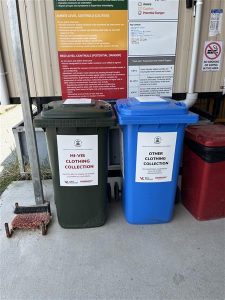
Hi-Vis and Textile Collection
Georgiou supplies unwearable workwear, and other clothing items, from its project sites. These textiles become the feedstock for the project.
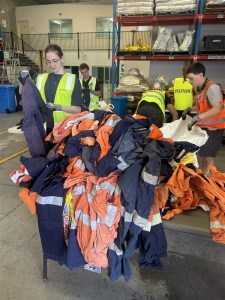
Vital Chemical Sorting Day
Salvos Australia delivers the textile sorting function through its Project Boomerang technology, including contamination assessment, classification of items as wearable or unwearable, and allocating each item to the most appropriate end use pathway.
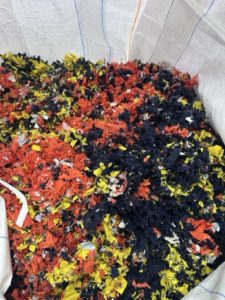
Decommissioning & Shredding
Earth Systems Australia provides the reactor used to conduct the pyrolysis stage of the project and completes the stack emissions testing that verifies the environmental performance of the process.
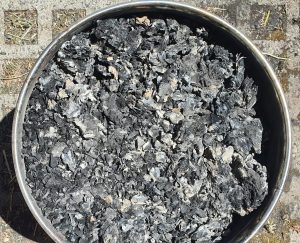
Pyrolysis & Stack Emissions Testing
Textile Recyclers Group undertakes the decommissioning of garments by removing non fabric components such as buttons and zips, which can be recycled through alternative pathways, and prepares the textile feedstock through shredding before pyrolysis.
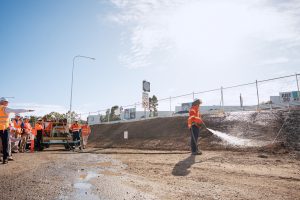
Product Application
The textile biochar infused hydromulch was applied for use on one of Georgiou’s civil and construction sites in South East Queensland.
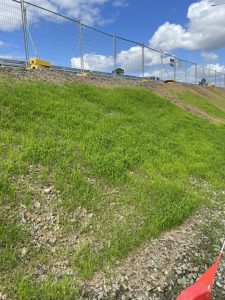
Next Markets
Vital Chemical is working with stakeholders to further develop circular environmental applications for diverting clothing textiles from landfill.